
Market News September 3, 2026
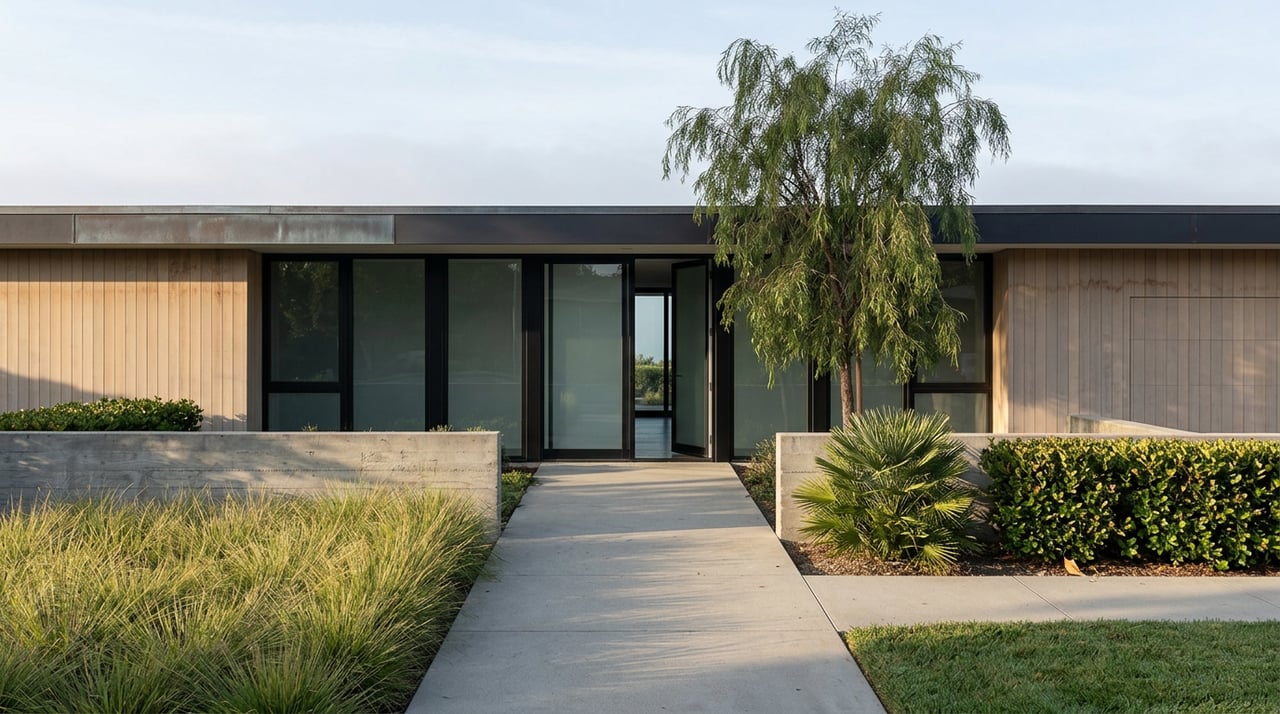
Picture two properties three doors apart in the Wilshire-Montana pocket of Santa Monica. Same block, same era of construction, same square footage on paper. One is a single-family house that just closed at full ask in two weeks. The other is a triplex with a tenant who has lived there since the Clinton administration. Both properties will show up in the same "Santa Monica median price" a portal spits out. Neither number tells you anything useful about the other.
That is the problem with quoting a single median for this city, and it is not a rounding error. It is baked into the way California law treats these two kinds of property.
Santa Monica does not have one housing market. Recent tracked closings across a six-month window show a median sale price around $1.8 million, but the middle half of those sales ranged from roughly $1.1 million to $2.875 million, an interquartile spread of more than $1.7 million on a single citywide figure. The explanation offered by the firm that compiled the data is straightforward: the city's condo and co-op stock and its detached houses, particularly the ones north of Montana Avenue or in Sunset Park, are entirely separate segments getting sold under one municipal roof. No single citywide number is usable for valuing a specific property at this price level.
Redfin's rolling window for the three months ending in May 2026 told a similar story from a different angle: a median sale price near $1.7 million, up modestly year over year, homes averaging 47 days on market and drawing about two offers apiece. Useful for a temperature check months ago. Useless today for telling you what a specific condo near Ocean Park or a specific bungalow north of Montana is actually worth, because those two products don't share a supply curve, a buyer pool, or, as it turns out, a legal category.
Here is the part that doesn't show up on any pricing chart. RentCheckMe reports that Santa Monica adopted its Rent Control Charter Amendment in 1979, one of the strongest local ordinances in California. It covers residential rental units in buildings that received a certificate of occupancy before April 10, 1979, so long as the parcel holds two or more rental units. Single-family homes and condominiums are exempt from that ordinance regardless of how old they are.
That exemption isn't a local courtesy. It's state law. The Costa-Hawkins Rental Housing Act, passed in 1995, preempts cities from applying rent caps to single-family homes and condos and it also ended what's called vacancy control, the practice of locking a unit's rent to a fixed ceiling even after a tenant moves out. Under Costa-Hawkins, once a tenant leaves voluntarily, the next tenancy can be set at market rent. That new rent then becomes the controlled baseline going forward, a mechanism the statute calls vacancy decontrol.
Put plainly: a single-family house and a condo unit in Santa Monica sit on one side of a legal line no matter their age. A pre-1979 duplex, triplex, or small apartment building sits on the other side, carrying whatever rent history is attached to each unit inside it.
The house and the rental building next door aren't different because of size or finish. They're different because one of them is legally allowed to reset to market and the other one carries its tenants' history on the title.
For a buyer comparing a house to a condo, this line mostly explains pricing behavior at the margins, why condo inventory can sit longer and negotiate harder than comparable single-family stock. Current California Association of Realtors data for May 2026 put the statewide condo and townhome median sold price at $665,000 with 4.5 months of supply, a very different pace than the tight, fast-moving detached market Santa Monica is known for. Condos aren't cheaper because they're inferior. They're cheaper and slower because they compete in a different financing tier and a different buyer pool, one with no rent-control complications attached but plenty of HOA and building-age questions of its own.
For a buyer looking at an older multi-unit property, the friction is more direct. If that triplex has a sitting tenant, the buyer doesn't get a blank slate. They inherit the Maximum Allowable Rent registered for that unit, and, according to BH Real Estate Law, they can only reset it to market once that specific tenant leaves on their own accord, not through a no-fault eviction or a buyout. Santa Monica's rule for what counts as genuinely new construction is narrower than most buyers assume: a gut renovation that keeps the foundation or structural walls in place still falls under the original 1979 threshold.
There's also a timing wrinkle worth knowing about right now. For the period that just ended, the allowable increase was 2.3%, capped at $60 a month. According to the City of Santa Monica, effective September 1, 2026, that adjustment rose to 2.6%, with a new cap of $70 a month for units already renting at $2,674 or more. Anyone closing on a rent-controlled multi-unit property around this date needs to know which year's adjustment applies to which lease The city also sets an annual per-unit registration fee, currently $240 for the 2026-2027 fiscal year, half of which an owner may pass through to tenants with proper notice.
Property type | Covered by Santa Monica rent control? | What that means for a buyer |
|---|---|---|
Single-family home | No, exempt under Costa-Hawkins regardless of age | Rent resets freely if ever leased; no MAR to inherit |
Condominium | No, exempt under Costa-Hawkins regardless of age | Same freedom as a single-family home, but competes in a slower financing tier |
Multi-unit building, certificate of occupancy on or after April 10, 1979 | No rent cap | Review the existing lease and tenant details |
Multi-unit building, certificate of occupancy before April 10, 1979 | Yes, rent-controlled | Buyer inherits registered rents; resets only on voluntary tenant departure |
Because condos and detached houses are legally and financially separate products, the neighborhood conversation in Santa Monica really has to happen twice, once for each product. The stock north of Montana and in Sunset Park is almost entirely detached, single-parcel housing, which means it trades inside the Costa-Hawkins-exempt category by default and behaves like the tight, fast single-family market the citywide headlines describe. The condo and co-op concentration downtown, along the Main Street corridor, and through Ocean Park is a different animal entirely, priced against a slower, more negotiable statewide condo backdrop rather than the detached market next door.
If you're comparing a house in one pocket to a condo in another, you're not really comparing neighborhoods. You're comparing two separate legal and financial systems that happen to share a zip code.
Does buying a rent-controlled building mean I'm stuck with the current rent forever? Not forever, but you can't reset it unilaterally. The rent resets to market only when the current tenant leaves on their own, and the new rate becomes the controlled baseline for the next tenancy.
Can a single-family home ever fall under Santa Monica's rent control? No. Single-family homes are exempt under state law regardless of age.
Why does the median price swing so much depending on the source? Because different reports measure different windows and blend different property types. A three-month snapshot, a six-month closing sample, and a citywide condo-versus-house breakdown will never agree, and none of them substitute for pricing the specific property in front of you.
If you're trying to figure out what a specific Santa Monica property is actually worth, rather than what the citywide average implies, that's the conversation worth having before you write an offer. Team Pinckert works this market block by block, on both sides of the exemption line. List Your Home when you're ready to find out what your property is worth on its own terms, not the blended ones.
This article is general information, not legal, tax or financial advice. Consult a qualified professional about your situation.
Stay up to date on the latest real estate trends.
Before & After
Market News
Market News

Market News

Market News
Market News
Market News
Because a home isn’t just an investment—it’s a place to build a life. Markets fluctuate, but our commitment to service, loyalty, and excellence remains steady.